North East Link - Lower Plenty D-Walls
Maintaining TBM progress through specialist rock saw configuration
Supplying specialist rock saw excavation equipment to support diaphragm wall works within cement-treated crushed rock conditions.
- Location
- Lower Plenty, Victoria
- Project type
- Tunnelling Infrastructure
The problem
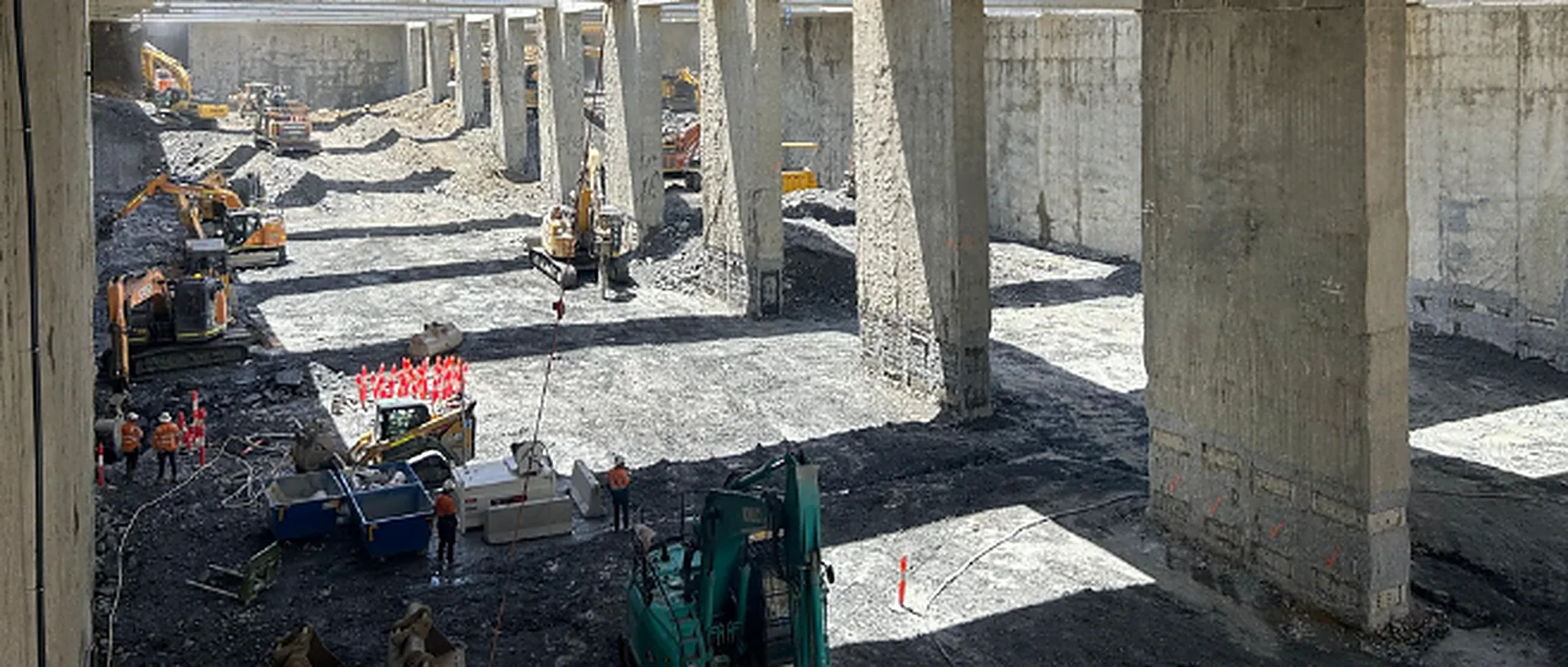
Diaphragm wall works on North East Link required cutting through 4% cement-treated crushed rock up to 600mm thick, along with the underlying platform material.
Due to the hardness of the cement-treated crushed rock, conventional cutting methods risked:
- Blade jamming and motor stalling
- Reduced cutting productivity
- Delays to diaphragm wall construction
- Programme impacts that could ultimately affect TBM sequencing
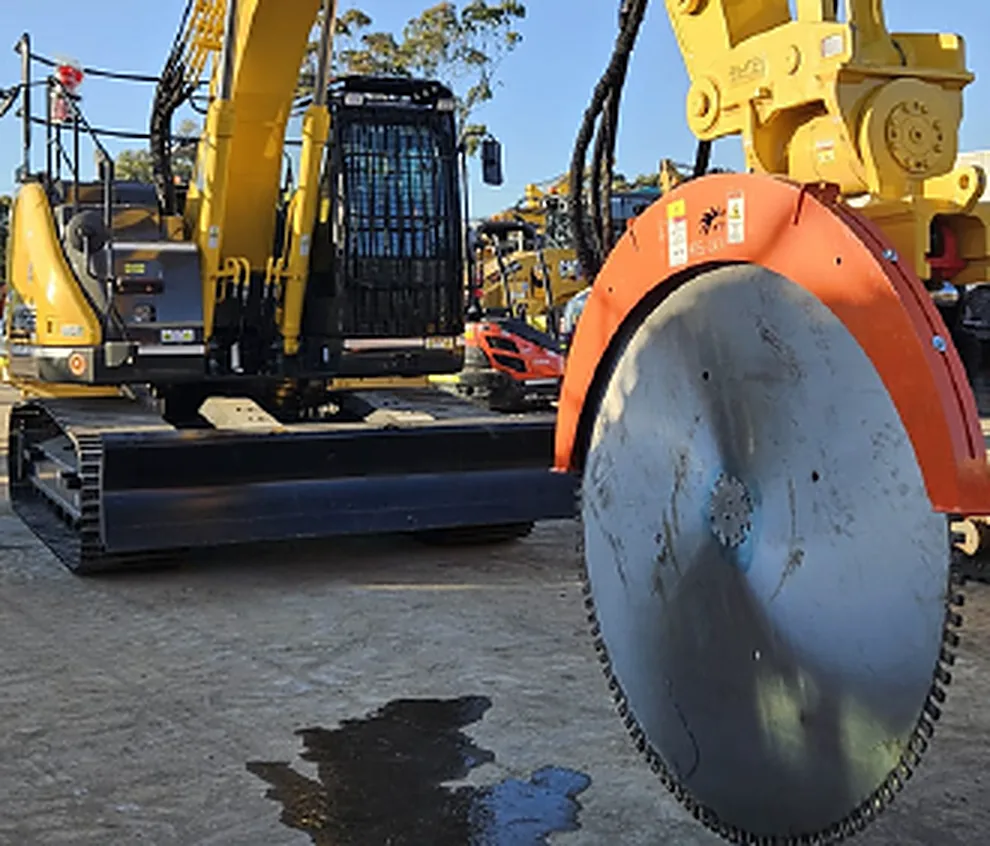
Initial attempts using a closed-tooth diamond blade configuration resulted in crushed rock building up around the blade and stalling the saw. The application required a specialist rock saw configuration capable of maintaining continuous cutting performance in the hardened material conditions.
The solution
Focus Machinery supplied:
- 1 x Sumitomo SH235X-6 25-tonne excavator
- Excavator-mounted rock saw attachment
- Tungsten-carbide pick style tooth configuration
The tungsten-carbide pick style teeth were specifically selected to cut through the cement-treated crushed rock without material build-up jamming the blade or stalling the hydraulic motor. Prior to mobilisation, Focus Machinery commissioned and tested the rock saw package and ensured all equipment was inducted to North East Link requirements through ChekRite before arriving on site.
The results
The configured rock saw package supported continuous cutting operations across the diaphragm wall works without equipment-related delays.
- 6 months on hire
- 100% uptime achieved once the correct blade configuration was established
- Zero breakdown events recorded
- Programme requirements maintained
- Zero compliance events recorded
The specialist attachment configuration allowed the project team to maintain cutting productivity within hardened ground conditions while avoiding programme impacts to downstream tunnelling activities.
Save or share this case study.
Download PDF