
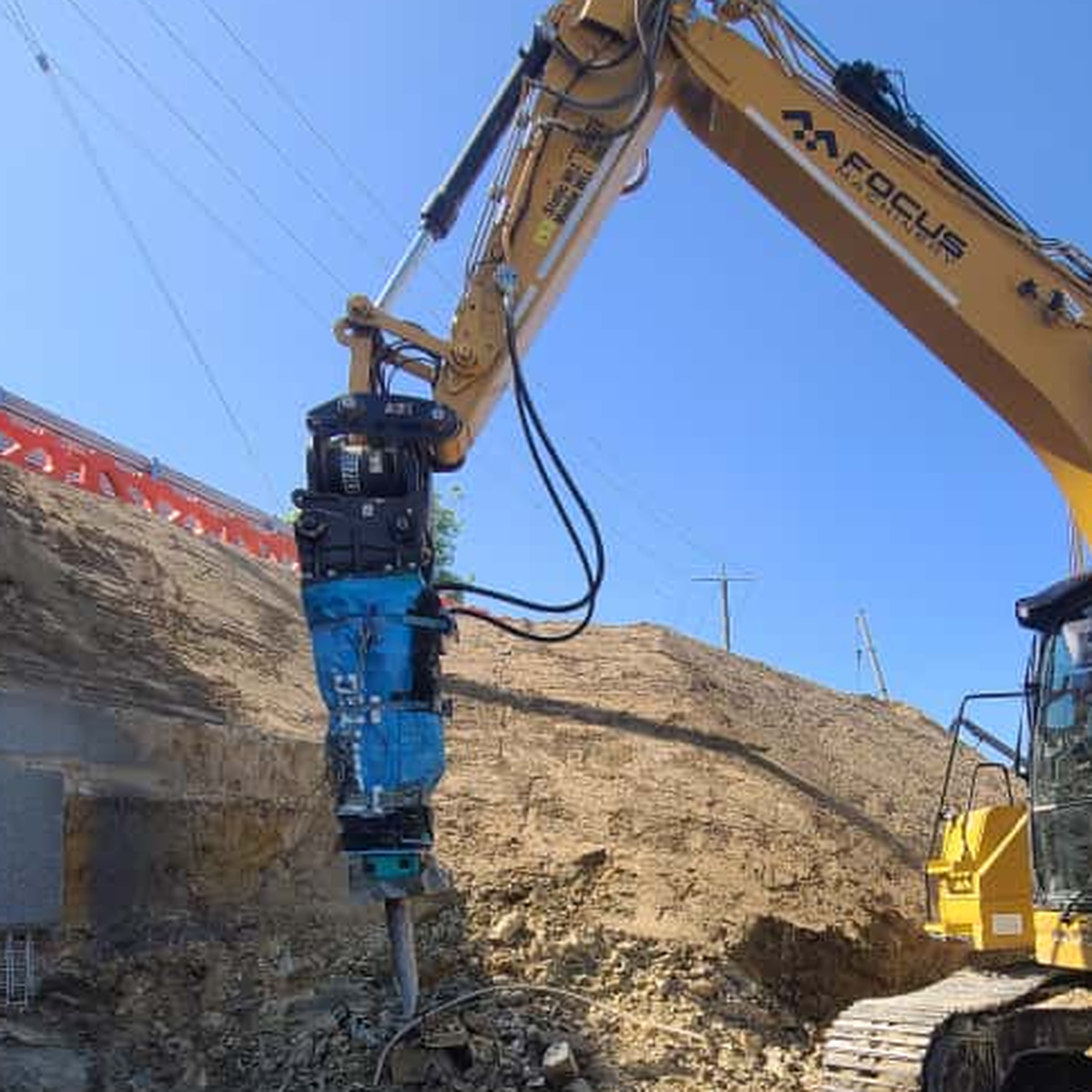
Hammer Noise Shroud
A compatible acoustic shroud is fitted around a breaker to help reduce airborne noise from the attachment.
When to choose it
- Breaking near noise-sensitive receivers
- Including an approved hammer enclosure in a noise-control plan
- Assessing additional airborne-noise controls for restricted work periods
When it’s not the right call
- Ground vibration control. An acoustic enclosure addresses airborne noise, not vibration transmitted through the ground.
- Automatic compliance. A shroud is one control, not proof that the complete operation meets the site noise limits.
- Unapproved fitment. The enclosure must suit the hammer, hoses, clearances and access needed for normal operation.
Sizes we work with
The size depends on your machine and the job. Share the carrier make and model, material and dimensions so we can check the setup.
Using your own machine or hiring ours? Include that in your enquiry.
The Right Setup Starts Here
Tell us what you need to get done. A few key details about your job help us specify, configure and commission the right attachment for your machine, application and site requirements.
- Hammer: Model, dimensions, hoses and operational clearances.
- Noise plan: Receiver locations, approved hours and monitoring requirements.
- Work: Material, breaking method and any dust or access constraints.
- Carrier and access: Machine make/model, operating weight, hitch, reach, working platform and relevant hydraulic circuits.
Tell us about your project.
Complex scope. Tight timeline. Compliance-critical. That's where we start.
Scope your job
Common questions
How can I reduce hydraulic hammer noise when breaking rock during night works?
Fit a compatible acoustic shroud around the breaker as part of an approved noise-control plan. The shroud encloses the hammer to reduce airborne noise at the source, but it is one control among several - the carrier, working method and site layout all contribute to the noise received nearby. On the Eastern Freeway Upgrade, a Hushtec-shrouded 2T rock breaker on a zero-swing CAT 325 supported night excavation within strict residential noise and vibration limits. Reduction achieved depends on fit, condition, material and site, so the complete setup still needs monitoring at receivers against the project limits.
What sizes do hydraulic hammer noise shrouds come in?
Shrouds are sized to the hammer they enclose rather than to a standard size list, so the enclosure must match the breaker model, its dimensions, hoses and the clearances needed for normal operation. We do not hold a verified size list for every shroud, so tell us your hammer make and model and we will confirm what enclosure options suit it. The excavator matters too: the carrier's weight class, hitch and working geometry all need checking before a shrouded hammer is specified for your job.
Will a hammer noise shroud fit my excavator and hydraulic breaker?
It needs to be checked against both. The shroud must suit the specific hammer - its model, dimensions, hose routing and operational clearances - and the excavator must suit the shrouded hammer's weight and working envelope. Supply the carrier make, model, operating weight and hitch details along with the hammer model, and we will confirm compatibility before anything mobilises. Unapproved fitment can restrict hammer operation or access, so this check happens as part of our Ready to Dig preparation, not on site.
Can a hammer noise shroud help meet noise restrictions near residential areas?
Yes, as one control within an approved noise-control plan - not as proof of compliance on its own. A shroud reduces airborne noise from the breaker at the source, which can help where works run near homes or within restricted hours. Whether the operation meets the project limits depends on the complete noise source, receiver locations and approved hours, so monitoring at receivers is still required. On the Eastern Freeway Upgrade, a shrouded breaker formed part of a configuration that enabled continuous night-shift excavation inside strict residential noise and vibration limits.
Does a hammer noise shroud reduce ground vibration?
No. A shroud is an airborne-noise control - it encloses the breaker to reduce the noise transmitted through the air. Vibration travels through the ground from the breaking action itself and is unaffected by the enclosure. Where ground vibration limits apply, such as near structures, services or sensitive equipment, that needs a separate assessment of the hammer size, energy, method and standoff distances. Tell us the vibration criteria for your site and we will help scope a breaking method that addresses both noise and vibration.