
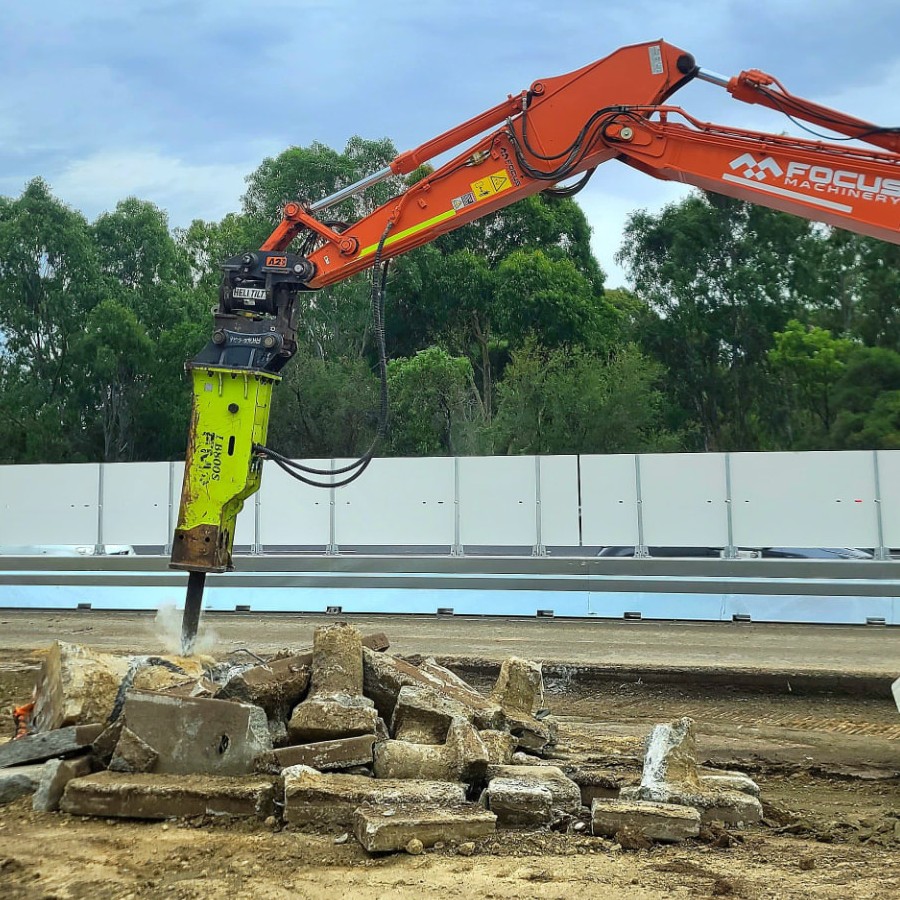
Hydraulic Hammer
A hydraulic breaker delivers repeated impacts through a selected working tool to fracture rock, concrete or pavement.
When to choose it
- Rock breakout in trenches, footings and excavations
- Removing concrete slabs, footings and pavements
- Reducing oversize rock before loading
When it’s not the right call
- Precision finishing. Breaking fractures material; a different tool may suit a controlled finished face.
- Prying or lifting. A hammer tool is not a lever or lifting point. Follow the approved operating method.
- Unassessed sensitive work. Noise, vibration, debris and dust controls must suit the surrounding assets and people.
Sizes we work with
0.8T - 35T carriers
Carrier weight is a starting point, not a fit confirmation. The attachment, mounting and operating requirements need to suit your machine.
Using your own machine or hiring ours? Include that in your enquiry.
The Right Setup Starts Here
Tell us what you need to get done. A few key details about your job help us specify, configure and commission the right attachment for your machine, application and site requirements.
- Material: Rock or concrete, element sizes and reinforcement.
- Breaking: Volume, fragment size, reach and removal requirements.
- Controls: Noise, vibration, dust, debris and any underwater working requirements.
- Carrier and access: Machine make/model, operating weight, hitch, reach, working platform and relevant hydraulic circuits.
Tell us about your project.
Complex scope. Tight timeline. Compliance-critical. That's where we start.
Scope your job
Common questions
What size hydraulic hammer do I need for my excavator?
The hammer has to suit both the excavator and the task - its weight class, hydraulic flow and pressure, and the material being broken. Tell us the carrier model, the material and what you are breaking, and we will match a hammer within that range.
Which hammer point should I use: chisel, moil or blunt?
Different working tools suit different jobs - chisels for splitting and trenching, moils for penetration, blunt tools for impact breaking of oversize. Selection follows the hammer manufacturer's recommendations for the material.
Can I use a hydraulic hammer during night works near homes?
Possibly, as part of an approved noise and vibration plan. A compatible acoustic shroud can reduce airborne noise from the hammer, but it does not make the work compliant on its own, and ground vibration needs a separate assessment. Monitoring at receivers against the project limits is still required.
Does a hammer noise shroud make breaking compliant?
Not automatically. A shroud is one airborne-noise control. Confirm the shroud fits the hammer, assess the complete noise source and receiver locations, and monitor against the approved limits.
Will a hydraulic hammer fit my excavator?
Supply the excavator make, model, operating weight and hitch details, plus available hydraulic flow, pressure and auxiliary circuits for powered tools. We check the hydraulic hammer against the carrier before anything mobilises, so the setup arrives matched to the machine and the task rather than being sorted out on site.