
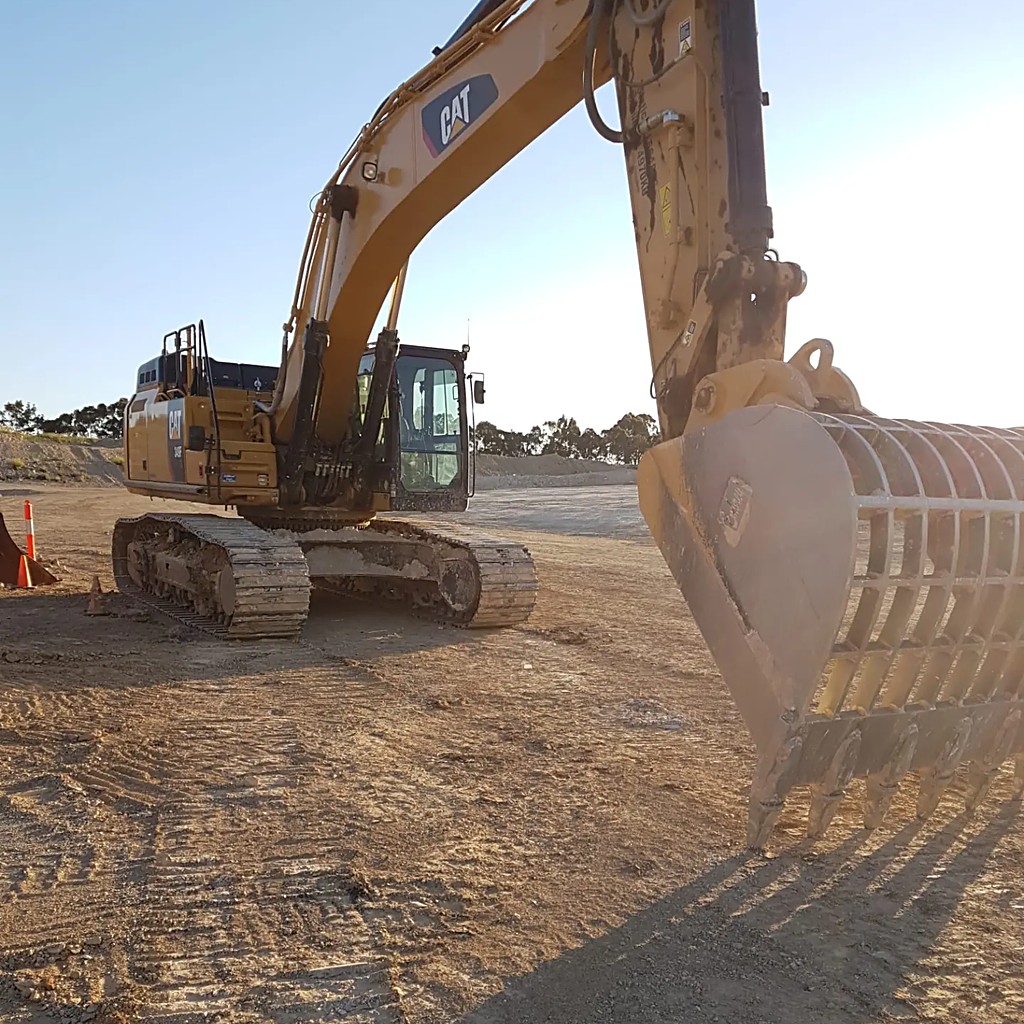
Sieve Bucket
An open-grid or skeleton bucket lets suitably sized loose material pass through while retaining larger pieces.
When to choose it
- Coarse separation of rock from loose soil
- Raking roots and rubble from suitable material
- Handling the retained fraction where fixed gaps suit the task
When it’s not the right call
- Precise screening. Fixed gaps provide coarse separation, not a guaranteed uniform particle grading.
- Wet clay. Sticky material can bridge the openings rather than sift through.
- Unassessed underwater work. Model approval, environmental controls and the operating method need separate checks.
Sizes we work with
0.8T - 35T carriers
Carrier weight is a starting point, not a fit confirmation. The attachment, mounting and operating requirements need to suit your machine.
Using your own machine or hiring ours? Include that in your enquiry.
The Right Setup Starts Here
Tell us what you need to get done. A few key details about your job help us specify, configure and commission the right attachment for your machine, application and site requirements.
- Feed: Rock, soil or debris, moisture and largest pieces.
- Openings: Required spacing and retained fraction.
- Handling: Excavation duty, output use and disposal method.
- Carrier and access: Machine make/model, operating weight, hitch, reach, working platform and relevant hydraulic circuits.
Tell us about your project.
Complex scope. Tight timeline. Compliance-critical. That's where we start.
Scope your job
Common questions
What is a sieve or skeleton bucket?
An open-grid bucket lets suitably sized loose material fall through while retaining larger pieces such as rock and debris.
Sieve bucket or screening bucket?
A sieve bucket is unpowered and relies on shaking; a screening bucket is powered and gives more consistent separation.
Can a sieve bucket dig?
It is a sorting tool for loose material rather than a digging bucket. Check the model's permitted duty.
What bar spacing do I need?
Spacing sets what passes through. Tell us the material and the size you need to retain.
Will a sieve bucket fit my excavator?
Supply the excavator make, model, operating weight and hitch details, plus available hydraulic flow, pressure and auxiliary circuits for powered tools. We check the sieve bucket against the carrier before anything mobilises, so the setup arrives matched to the machine and the task rather than being sorted out on site.